
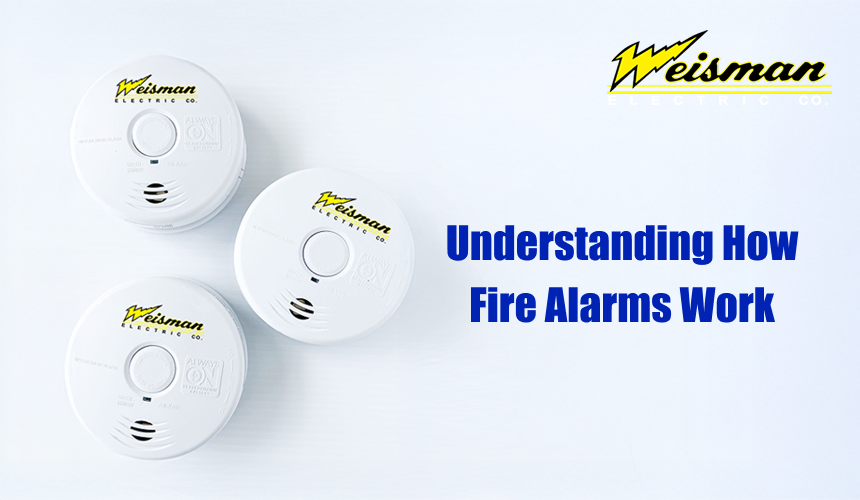
Fire alarms are among the most essential safety devices in any home or business. They serve as the first line of defense against fire by alerting you at the earliest signs of smoke. While nearly every household has them, few people truly understand how they function. The science and engineering behind these devices is both fascinating and lifesaving.
In this blog, we’ll explain how fire alarms work, the different types available, why proper installation matters, and how residential electrical contractors play a role in keeping your home safe.
Why Fire Alarms Matter
According to the National Fire Protection Association (NFPA), three out of five home fire deaths occur in properties without working smoke detectors or fire alarms. Having detectors installed and ensuring they’re in good condition can literally save lives. These small devices are designed to provide early warning, giving you and your family valuable time to escape during a fire emergency.
The Science Behind Fire Alarms
Most fire alarms rely on a small amount of a radioactive element called Americium-241. This element emits alpha particles that collide with oxygen and nitrogen molecules in the air, producing ions. A battery inside the detector creates a small electrical current by moving these ions back and forth.
When smoke enters the detector’s chamber, it disrupts this current by attaching to the ions. This disruption triggers the alarm, producing the loud, unmistakable sound that warns you of potential danger.
While the process may sound complex, the result is simple: smoke interrupts the flow of current, and the alarm goes off to alert you.
Types of Fire Alarms
Not all fire alarm systems operate in the same way. Understanding the differences can help you choose the right one for your home.
1. Ionization fire alarms
These detectors are best at sensing fast-flaming fires. They use Americium-241 to detect smoke particles quickly and are widely used in residential settings.
2. Photoelectric fire alarms
Instead of radiation, these detectors use a beam of light. When smoke particles scatter the light beam, the sensor detects the change and sounds the alarm. They are more effective at detecting smoldering fires.
3. Dual-Sensor fire alarms
For the best protection, many homeowners choose dual-sensor detectors. These combine both ionization and photoelectric technology to detect a wider range of fire scenarios.
Where to Place Fire Alarms in Your Home
Placement is just as important as having fire alarms in the first place. The NFPA recommends:
- Installing detectors inside every bedroom.
- Placing them outside each sleeping area.
- Ensuring there is at least one detector on every level of the home, including the basement.
- Mounting them high on walls or ceilings, since smoke rises.
If you’re unsure where detectors should be placed in your home, a licensed residential electrical contractor can help design a setup tailored to your layout.
Maintenance and Testing
A fire alarm is only effective if it works properly. Homeowners should:
- Test detectors monthly using the test button.
- Replace batteries at least once a year, or when the detector chirps.
- Replace the entire unit every 8–10 years, as sensors lose effectiveness over time.
- Keep detectors free of dust and debris, which can interfere with sensors.
If your detectors are interconnected as part of a whole-home system, scheduling regular residential electrical repairs ensures everything operates safely.
The Role of Electrical Services
Fire alarms may be small, but their role in protecting lives and property is enormous.
Many modern fire alarms are hardwired into a home’s electrical system and feature battery backups for added safety. Professional installation ensures the detectors are interconnected, so if one alarm sounds, they all do. This interconnected system provides faster, whole-home alerts that increase your chances of escaping safely.
By hiring a licensed electrician to handle installation and maintenance, you ensure that your detectors comply with code requirements and operate at peak performance. That’s why it’s essential to trust experts who specialize in electrical services for safety-critical systems like fire alarms.
Why Choose Professional Help
DIY installation may be tempting, but fire alarms are too important to risk improper setup. An experienced electrician can:
- Assess your home for proper placement.
- Recommend the right type of detectors.
- Ensure compliance with local codes.
- Test the system thoroughly after installation.
At Weisman Electric Co., we have been providing trusted electrical services in Maryland for more than 40 years. From installing fire alarms to handling full-system inspections and repairs, our team ensures your family has the protection it deserves.
Contact us today to schedule an inspection visit and to learn more about our fire alarm installation services.
FAQs
1. How often should I replace smoke detectors/fire alarms?
Most detectors should be replaced every 8–10 years, even if they still appear to work. Over time, sensors degrade and lose accuracy.
2. Can I install fire alarms myself?
While battery-operated models are easy to install, hardwired detectors should be installed by a professional electrician to ensure safety and compliance with local codes.
3. Are interconnected fire alarms better?
Yes. Interconnected detectors communicate with one another, so if one alarm goes off, all alarms in the home sound. This provides faster and more effective alerts.
4. Do fire alarms need regular cleaning?
Yes. Dust, cobwebs, and debris can interfere with sensors. Gently vacuum or wipe around detectors every few months to keep them functioning properly.
5. What’s the difference between fire alarms and smoke alarms?
A fire alarm senses smoke, while a smoke alarm combines the sensor with an audible alarm. In residential use, the terms are often used interchangeably.