
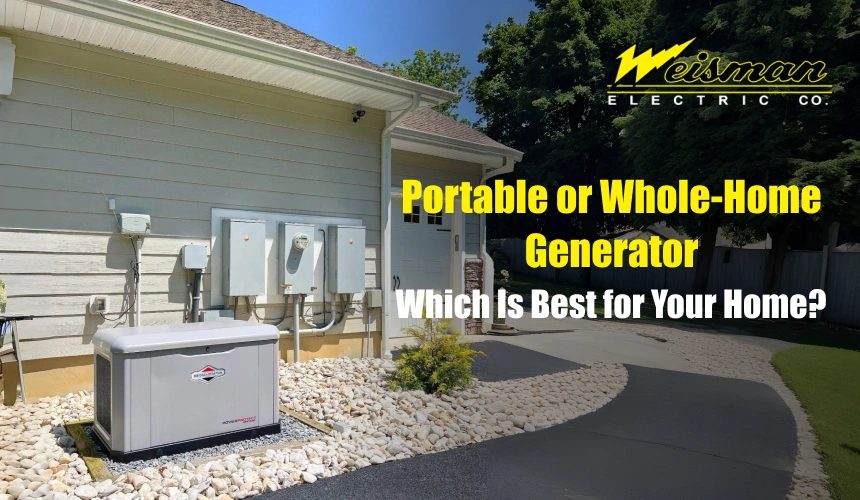
Power outages are becoming more common across the United States as storms grow stronger and electricity demand increases. In Maryland, outages can occur during winter storms, summer heat waves, and heavy rain in the spring or fall.
When power goes out, daily life can quickly become difficult. Refrigerators stop running, heating and cooling systems shut down, and essential electronics lose power. For many homeowners, investing in a backup generator provides peace of mind and protection during these disruptions.
However, one question often arises: Should you choose a portable generator or a whole-home standby generator?
Both options provide backup power, but they serve different needs depending on your household size, budget, and expectations during outages. Understanding how they differ can help you choose the best solution for your home and family.
Why Backup Power Matters for Modern Homes
Modern homes rely heavily on electricity. From kitchen appliances and HVAC systems to home offices and security systems, even short power outages can disrupt daily routines.
For families with young children, elderly residents, or medical equipment, outages can pose serious challenges. Food spoilage, temperature fluctuations, and security interruptions are just a few potential problems.
A reliable generator ensures essential systems continue operating during outages, helping families stay comfortable and safe.
What Is a Portable Generator?
Portable generators are compact units that can be moved and operated manually. They typically run on gasoline or propane and provide temporary power for selected appliances or devices.
Homeowners usually start them manually and connect appliances using heavy-duty extension cords or transfer switches. Portable generators are commonly used during short outages when only a few essential appliances need power.
Because of their affordability and flexibility, portable generators are a popular option for homeowners looking for basic backup power.
Benefits of Portable Generators
Portable generators offer several advantages for homeowners who experience occasional outages.
The most significant benefit is cost. Portable units are far less expensive than whole-home generator systems, making them appealing for households with smaller budgets.
They are also flexible and easy to store. Many homeowners use portable generators for outdoor projects, camping, or recreational activities, as well as for home backup power.
Another advantage is simplicity. With proper safety precautions, many homeowners can operate portable generators with minimal setup.
Limitations of Portable Generators
While portable generators are useful, they also have limitations.
Most units can power only a few appliances at once. They may support refrigerators, lights, or small electronics but usually cannot handle larger systems like central air conditioning or electric water heaters.
They also require manual operation. During storms or severe weather, homeowners must go outside to start the generator and connect appliances.
Fuel storage can be another challenge. Gasoline-powered generators require regular refueling during extended outages, which can be inconvenient in severe weather.
For larger households or homes with higher power demands, portable generators may not provide enough coverage.
What Is a Whole-Home Standby Generator?
Whole-home generators, also known as standby generators, are permanently installed systems designed to power an entire home during outages.
These systems connect directly to the home’s electrical panel and fuel supply, typically natural gas or propane. When utility power fails, the generator automatically activates and restores power within seconds.
Professional standby generator installation ensures the system is properly connected and can power essential circuits or even the entire home.
How an Automatic Transfer Switch Makes Standby Generators Seamless
A major advantage of standby generators is their automation, made possible by an automatic transfer switch (ATS).
The transfer switch continuously monitors incoming electricity from the utility grid. When it detects a power outage, it disconnects your home from the grid and signals the generator to start.
Within seconds, the standby generator begins supplying electricity to your home. Once utility power returns, the transfer switch reconnects to the grid and safely shuts down the generator.
Because this process happens automatically, homeowners don’t need to start the generator manually or run extension cords during storms.
When included as part of professional standby generator installation, the transfer switch ensures your home transitions smoothly between utility power and backup power.
Advantages of Whole-Home Generators
Standby generators provide reliability and convenience that portable units cannot match.
One of the biggest advantages is automatic operation. The system starts immediately when power is lost, even if no one is home.
Whole-home generators can power larger appliances and systems, including HVAC units, sump pumps, kitchen appliances, lighting, and home offices.
This allows families to continue their daily routines with minimal disruption during outages. For households with multiple residents or high electricity usage, this level of reliability is especially valuable.
Understanding Installation and Setup
Unlike portable generators, standby generators require professional installation.
The system must connect to your home’s electrical panel through a transfer switch and integrate with the fuel supply. A licensed electrician performs load calculations to determine the correct generator size for your home.
Professional backup generator installation ensures the system meets safety codes and operates reliably when needed.
Comparing Costs: Portable vs. Whole-Home Generators
Cost is often the deciding factor when choosing a generator.
Portable generators typically have a lower upfront price. However, they require ongoing fuel purchases and manual operation during outages.
Whole-home generators require a larger initial investment because of equipment and installation costs. In return, they offer automatic operation, greater power capacity, and increased home value.
For families who experience frequent outages or rely heavily on electricity, the long-term benefits of standby generators often outweigh the upfront costs.
Fuel Options for Portable and Whole-Home Generators
Fuel type is another important factor when choosing a generator.
Portable generators commonly run on gasoline, though some models also use propane or diesel. Gasoline-powered units are easy to operate but require frequent refueling during extended outages.
Whole-home generators typically use natural gas or propane. If your home already has a natural gas connection, the generator can run continuously as long as fuel is available.
This reliable fuel source is one reason many homeowners choose professional backup generator installation for long-term power security.
Choosing Based on Family Size and Lifestyle
Your household size plays a key role in selecting the right generator.
Smaller homes with minimal power needs may find portable generators sufficient. These systems can power a refrigerator, lights, and small devices during short outages.
Larger families often require more consistent power. Homes with multiple bedrooms, home offices, and large appliances benefit from the reliability of standby generators.
Whole-home systems are also ideal for homeowners who travel frequently or want automatic protection during unexpected outages.
Safety Considerations
Safety is essential when operating any generator.
Portable generators must always be used outdoors and positioned at least 20 feet away from doors, windows, and vents to prevent carbon monoxide exposure. They should never be used in garages, basements, or enclosed spaces.
Standby generators reduce many of these risks because they are permanently installed outdoors and properly vented.
Professional installation also ensures correct grounding and safe electrical connections.
Long-Term Value and Home Protection
Backup generators provide more than convenience; they protect your home.
Power outages can damage appliances, spoil food, and disrupt security systems. A generator helps prevent these issues by keeping essential systems running.
Whole-home generators may also increase property value. Many buyers view reliable backup power as an attractive feature, particularly in areas prone to storms.
Quick Guide: Choosing the Right Generator for Your Home
Every home has different power needs, so the best generator depends on your lifestyle and budget.
A portable generator may be suitable if you experience occasional outages and only need to power a few essential appliances.
A whole-home standby generator is often the better choice for larger households, homes with higher electrical demand, or families who want uninterrupted power during outages.
Choosing the right system ensures your home remains safe and comfortable whenever the power goes out.
How Weisman Electric Co. Can Help

Choosing the right generator requires careful planning and professional expertise.
For over 40 years, Weisman Electric Co. has served homeowners throughout Maryland with reliable electrical solutions. Our team specializes in backup generator installation and standby generator installation, helping families prepare for power outages with confidence.
Whether you’re exploring portable options or considering a whole-home system, our experienced electricians can evaluate your home, recommend the best generator solution, and ensure safe installation.
We serve Severna Park, Severn, Annapolis, Pasadena, Crofton, Arnold, Millersville, Edgewater, Mayo, Gambrills, Crownsville, and surrounding areas. With decades of experience and a commitment to quality service, we help Maryland homeowners stay powered and protected year-round.
Contact us today to schedule a visit.
FAQs
1. How long can a whole-home generator run during an outage?
Most standby generators can run for days as long as they have a continuous fuel supply from natural gas or propane.
2. Are portable generators safe for indoor use?
No. Portable generators must always be used outdoors and away from doors and windows to prevent carbon monoxide exposure.
3. How much power does a whole-home generator provide?
Standby generators can power essential circuits or the entire home depending on the system size and electrical load.
4. Do standby generators require maintenance?
Yes. Regular maintenance ensures the generator operates efficiently and remains ready during emergencies.
5. Can a generator increase home value?
Yes. Homes with standby generators often attract buyers who value reliable backup power during outages.