
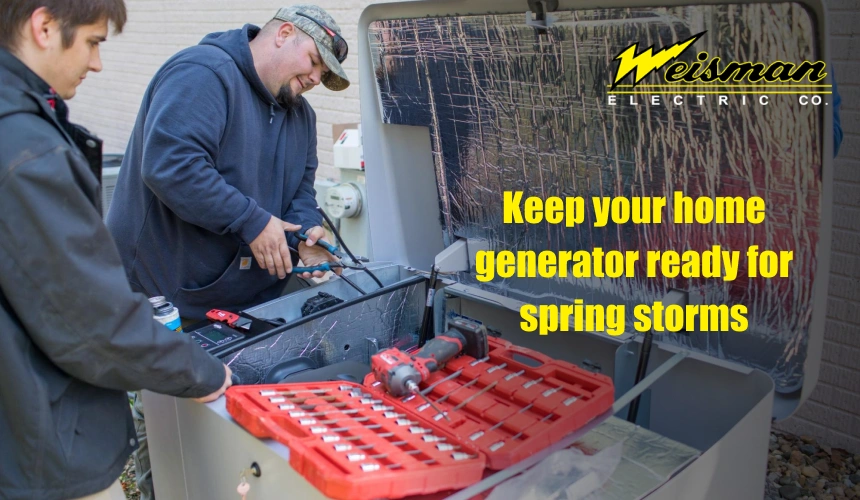
Spring is just around the corner, and this season in Maryland brings warmer temperatures, blooming trees, and, well, a spike in power outages. Spring storms featuring high winds, heavy rain, and lightning are among the most disruptive. For homeowners who rely on generators, spring is a critical season. Units that performed well through winter may now face additional stress from moisture, debris, and inconsistent use.
The good news is that most springtime generator failures are preventable. With regular maintenance and a few proactive checks, you can ensure your generator is ready to perform when the next storm hits.
In this guide, we walk you through practical preventive steps for generator maintenance to protect your investment, extend equipment life, and avoid unexpected power interruptions.
Why spring generator maintenance matters
After winter, many generators have endured long runtimes, cold starts, and heavy electrical loads. As temperatures rise, moisture levels increase, and pollen, dust, and debris accumulate. These conditions can affect airflow, fuel quality, batteries, and electrical connections.
Spring is also when homeowners tend to use generators less frequently. Long periods of inactivity can cause batteries to weaken, fuel to degrade, and seals to dry out. Without maintenance, the first real test may be a spring storm, when you need backup power most.
Routine spring maintenance ensures your generator transitions smoothly from winter demand to reliable warm-weather readiness.
Start with a visual inspection
Begin by examining the generator’s exterior and the surrounding area. Look for signs of corrosion, rust, loose panels, or animal nests. Spring is a common time for pests to seek shelter inside generator enclosures, which can damage wiring and insulation.
Clear away leaves, dirt, and debris from vents and air intakes. Proper airflow prevents overheating and ensures efficient operation. If the generator sits near landscaping, trim back plants to maintain safe clearance.
This simple inspection often reveals small issues before they become major problems.
Test the generator under load
Running your generator periodically is essential. A spring-load test confirms that the system starts properly, stabilizes the voltage, and delivers consistent power.
Let the generator run long enough to reach operating temperature. Listen for unusual noises and watch for warning lights or error messages. If the unit struggles to start or shuts down unexpectedly, it’s a sign that service is needed.
Regular testing is especially important for homeowners with automatic standby systems installed as part of a home generator installation. These systems are designed to operate seamlessly, but only if they’re properly maintained.
Check and change engine oil
Oil plays a critical role in generator performance. Over time, oil breaks down and collects contaminants that reduce lubrication and increase engine wear.
Spring is an ideal time to change the oil, especially if your generator ran frequently during winter outages. Fresh oil helps the engine run cooler, quieter, and more efficiently.
Always use the oil type recommended by the manufacturer. If you’re unsure, a professional technician can handle oil changes as part of routine maintenance.
Inspect and replace filters
Air and fuel filters protect your generator’s internal components. During winter, filters may collect dust, soot, or moisture. In spring, pollen adds another layer of buildup.
Clogged filters restrict airflow and fuel delivery, reducing performance and increasing strain on the engine. Inspect filters closely and replace them if they appear dirty or damaged.
Clean filters improve fuel efficiency and help your generator respond quickly during an outage.
Test the battery and charging system
Generator batteries are one of the most common failure points. Cold winter temperatures and long idle periods both shorten battery life.
Check battery terminals for corrosion and ensure connections are tight. Measure the test voltage to confirm the battery retains a charge. If the battery is more than three years old or shows signs of weakness, replacement is often the safest option.
Reliable batteries are essential for automatic systems, particularly those installed during a generator installation meant to provide seamless backup power.
Examine fuel quality and supply
Fuel condition plays a major role in generator reliability. Gasoline and diesel degrade over time, while propane and natural gas systems still require inspection for leaks or pressure issues.
If your generator uses stored fuel, confirm its fresh and, if necessary, treated with a stabilizer. Stale fuel can clog injectors and prevent smooth operation.
For propane or natural gas units, inspect lines and valves and verify supply levels. A professional technician can safely test connections and ensure fuel delivery remains consistent.
Check the cooling system
Generators generate heat during operation, and cooling systems keep temperatures within safe limits. Spring maintenance should include checking coolant levels (if applicable), inspecting hoses, and confirming that vents are unobstructed.
Overheating reduces performance and shortens equipment life. Proper cooling is especially important as spring temperatures rise.
Test the transfer switch
The transfer switch is the component that routes power from the generator to your home. If it fails, your generator may continue running without supplying power to essential circuits.
Test the switch to confirm it activates smoothly and returns power to the utility line once service is restored. This step is often overlooked but is critical for full-system reliability.
Professional inspections typically include transfer switch testing as part of comprehensive residential generator services.
Update software and settings
Many modern generators include digital controllers or monitoring apps. Spring is a good time to check for firmware updates and review system settings.
Confirm that exercise schedules, alert notifications, and automatic start features are configured correctly. These settings help identify issues early and ensure the system responds as designed.
Address wear from winter use
Winter usage can accelerate wear on belts, seals, and electrical connections. Inspect these components for cracks, looseness, or signs of aging.
Replacing worn parts proactively reduces the risk of breakdowns during spring storms. It also extends your generator’s overall lifespan.
Schedule professional maintenance
While homeowners can perform basic checks, professional service provides deeper insight. Licensed technicians can test internal components, analyze performance data, and identify issues that aren’t visible externally.
Professional maintenance also protects manufacturer warranties and ensures compliance with safety standards. Scheduling service in spring helps you avoid peak-season delays when storms increase demand for emergency repairs.
Why preventive maintenance saves money
Preventive care costs far less than emergency repairs or replacement. A well-maintained generator operates more efficiently, consumes less fuel, and experiences fewer failures.
Regular maintenance also protects sensitive appliances and electronics from power fluctuations. The result is fewer disruptions, lower long-term costs, and greater peace of mind.
Weisman Electric Co.: Trusted Generator Experts in Maryland
For over 40 years, Weisman Electric Co. has helped Maryland homeowners stay prepared with dependable backup power solutions. Our team provides expert residential generator services, including inspections, maintenance, repairs, and professional home generator installation for new and existing homes.
We serve Severna Park, Severn, Annapolis, Pasadena, Crofton, Arnold, Millersville, Edgewater, Mayo, Gambrills, Crownsville, and surrounding areas.
We understand the demands that Maryland’s weather places on power systems. That’s why we tailor generator solutions to your home’s needs, ensuring reliable performance through every season. Whether you’re maintaining an existing system or planning an upgrade, our experts deliver experience you can trust.
FAQs
1. How often should I service my home generator?
Most generators should be serviced at least once a year, with additional checks after heavy use or major storms.
2. Can I perform generator maintenance myself?
Basic inspections are fine, but professional service is recommended for oil changes, load testing, and electrical inspections.
3. Why won’t my generator start after winter?
Common causes include weak batteries, stale fuel, or clogged filters. Spring maintenance addresses these issues early.
4. How long do residential generators typically last?
With proper maintenance, many generators last 15–20 years or more.
5. Is spring the best time to schedule generator service?
Yes. Spring allows you to prepare ahead of peak storm season and avoid emergency service delays.