
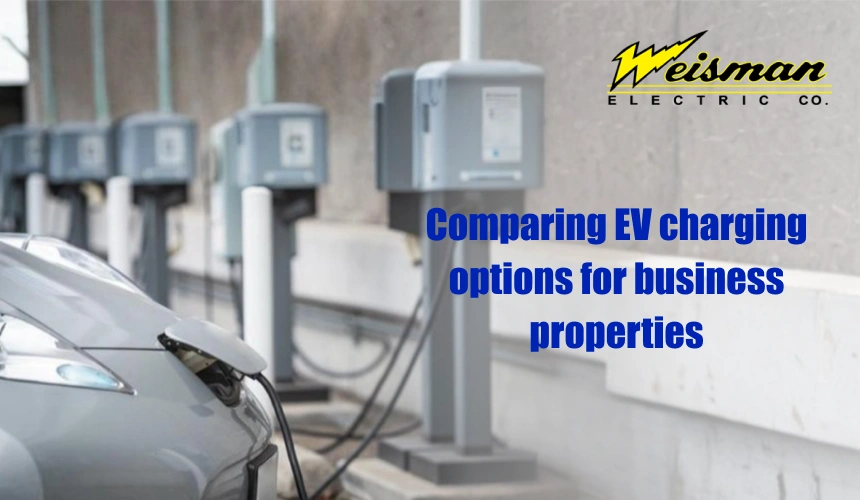
Electric vehicles are no longer a niche trend; they’re becoming the new normal. Maryland ranks among the top states for EV adoption, driven by strong incentives and sustainability goals. At the same time, businesses are under increasing pressure to support EV infrastructure, attract eco-conscious customers, and future-proof their properties.
One of the biggest questions Maryland business owners ask is simple:
Should we install Level 1 or Level 2 EV chargers, and which option delivers the best return on investment (ROI)?
The answer depends on your business type, customer behavior, and long-term goals. This guide breaks down the differences, costs, benefits, and ROI potential of Level 1 vs. Level 2 chargers so you can make an informed decision.
Why EV charging matters for Maryland businesses
EV charging stations are no longer just a “nice-to-have.” They are becoming an expected amenity for employees, tenants, customers, and visitors.
Offering EV charging helps businesses:
- Attract and retain customers
- Support sustainability initiatives
- Increase property value
- Enhance brand image
- Prepare for future transportation trends
Whether you operate an office building, retail center, hotel, or mixed-use property, EV charging can directly impact foot traffic and customer loyalty.
Understanding Level 1 EV chargers
Level 1 chargers use a standard 120-volt outlet, the same type found in most homes.
These chargers deliver about 2–5 miles of range per hour, making them the slowest EV charging option.
For homeowners, Level 1 charging can sometimes work as a basic residential EV charging station, especially for drivers with short daily commutes. For businesses, however, the limitations quickly become apparent.
Level 1 chargers are best suited for:
- Very long dwell times (8+ hours)
- Low-usage employee parking
- Minimal upfront investment
They are inexpensive to install, but the slow charging speed often limits their usefulness in commercial environments.
Understanding Level 2 EV chargers
Level 2 chargers operate on a 240-volt circuit and deliver 12–40 miles of range per hour, depending on the vehicle and charger type.
This faster charging speed makes Level 2 chargers the preferred option for most commercial applications.
Level 2 chargers are ideal for:
- Retail locations
- Office buildings
- Restaurants
- Hotels
- Multifamily properties
- Public and semi-public parking areas
Although the upfront cost is higher, the improved usability and customer satisfaction often result in significantly better ROI.
Installation cost comparison
One of the first considerations for any business is cost.
Level 1 chargers generally require minimal electrical upgrades. However, they still involve labor, permitting, and safety considerations.
Level 2 chargers typically require:
- Electrical panel evaluation
- New 240-volt circuits
- Load calculations
- Permits and inspections
This is where professional EV charging station installation becomes critical. Improper installation can limit performance, create safety risks, or prevent future expansion.
While Level 2 systems cost more initially, they often unlock higher incentives, rebates, and long-term financial benefits.
ROI breakdown: Level 1 vs. Level 2
Customer usage and dwell time
Level 1 chargers only work when vehicles remain parked for extended periods. This rarely aligns with customer behavior at most businesses.
Level 2 chargers match real-world usage. Customers can gain meaningful charge during shopping, dining, or meetings, making them far more attractive.
Higher usage directly improves ROI.
Revenue opportunities
Many Level 2 systems support:
- Pay-per-use pricing
- Membership access
- Time-based fees
Level 1 chargers rarely generate revenue due to slow charging and low demand.
For businesses interested in monetizing EV charging, installing commercial EV charging stations with Level 2 equipment offers significantly greater financial potential.
Incentives and tax credits
Maryland businesses may qualify for:
- Federal tax credits
- State rebates
- Utility incentives
- Depreciation benefits
These incentives often favor Level 2 installations, significantly reducing net costs and improving ROI timelines.
Brand and property value impact
Businesses with visible, fast EV charging signal innovation and sustainability.
Level 2 chargers enhance:
- Brand reputation
- Tenant satisfaction
- Lease appeal
- Property valuation
Level 1 chargers, while functional, do not deliver the same perception or competitive advantage.
Employee vs. customer charging needs
For employee-only parking with long dwell times, Level 1 may work in limited scenarios.
For customer-facing businesses, Level 2 is almost always the better choice.
Many Maryland businesses choose a hybrid approach:
- Level 2 chargers for customers
- Limited Level 1 charging for long-term employee parking
A professional electrician can help design the right mix.
Electrical capacity and future scalability
One of the biggest mistakes businesses make is installing chargers without planning for growth.
EV adoption is accelerating. What seems adequate today may be insufficient in three to five years.
Professional commercial EV charging station installation includes:
- Load management planning
- Panel capacity evaluation
- Scalability considerations
- Future expansion readiness
Level 2 systems are far more adaptable to future demand.
Maintenance and reliability
Level 2 chargers are built for commercial use and tend to offer:
- Better durability
- Smarter monitoring
- Network management tools
- Easier maintenance tracking
This reliability improves uptime and ensures consistent ROI.
Which option delivers the best ROI for Maryland businesses?
In most cases, Level 2 EV chargers provide the strongest ROI.
They attract more users, support faster charging, generate revenue, qualify for better incentives, and future-proof your investment.
Level 1 chargers may make sense for limited, low-demand scenarios, but they rarely deliver meaningful returns for customer-facing businesses.
Why professional installation matters
EV chargers are not plug-and-play commercial equipment.
Professional installation ensures:
- Electrical code compliance
- Safe load balancing
- Optimal charger placement
- Permit approval
- Long-term reliability
Whether you’re installing one charger or scaling across multiple locations, working with an experienced contractor protects your investment.
Weisman Electric Co.: Maryland’s EV charging experts
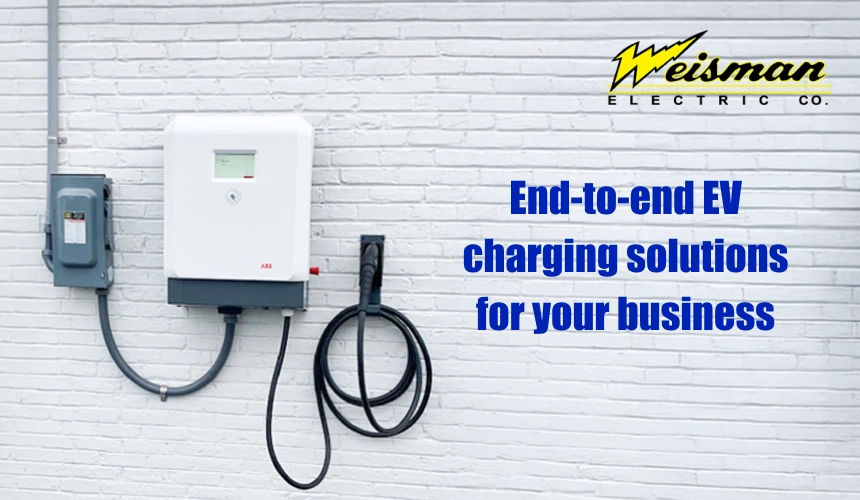
For more than 40 years, Weisman Electric Co. has helped Maryland homeowners and businesses implement safe, reliable electrical solutions. We serve Severna Park, Severn, Annapolis, Pasadena, Crofton, Arnold, Millersville, Edgewater, Mayo, Gambrills, Crownsville, and surrounding areas in Maryland.
Our team specializes in:
- Residential EV charging station installations
- EV charging station installation for commercial properties
- Full commercial EV charging station installation planning and execution
From load assessments to permitting and long-term support, we ensure your EV charging investment delivers maximum ROI and performance.
If you’re ready to upgrade your property with EV charging, Weisman Electric Co. is here to help every step of the way. Contact us today to know more.
Frequently Asked Questions (FAQs)
1. Is Level 2 EV charging worth the higher upfront cost?
Yes. Faster charging, higher usage, incentives, and revenue potential often result in better long-term ROI.
2. Can businesses charge customers for EV charging?
Yes. Many Level 2 systems support pricing models that generate revenue or offset electricity costs.
3. How long does it take to install EV chargers?
Installation timelines vary, but most commercial installations take a few days once permits are approved.
4. Do EV chargers increase property value?
Yes. Properties with EV charging are more attractive to tenants, buyers, and customers.
5. Can chargers be expanded in the future?
With proper planning, yes. Professional installation ensures scalability as EV demand grows.