
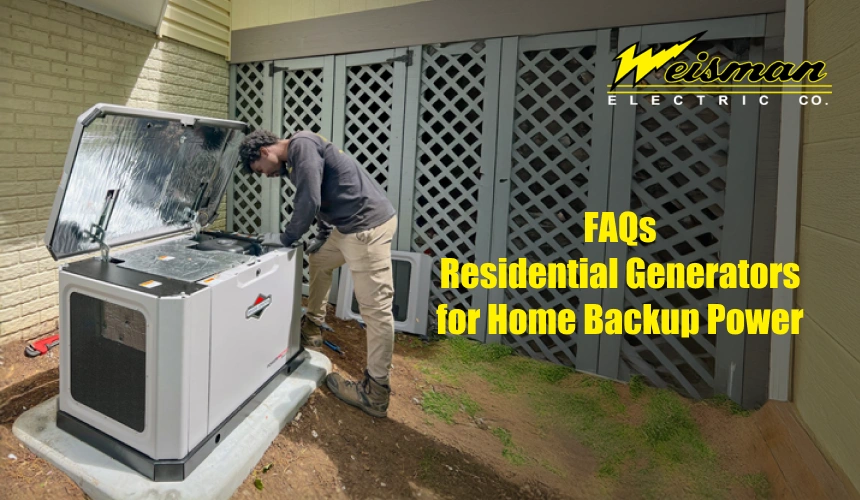
Power outages are no longer rare inconveniences. Severe storms, aging infrastructure, and increased electrical demand make outages more frequent across Maryland. For many homeowners, residential generators have become essential for maintaining comfort, safety, and peace of mind during power outages.
If you’re considering a generator for your home, or already have one, it’s important to understand how these systems work, how they should be installed, and how they protect your household. This guide answers common questions homeowners have when exploring residential generators and explains why professional installation and maintenance are essential.
What Is a Residential Generator?
A residential generator is a backup power system designed to supply electricity to your home during an outage. Unlike portable units, standby residential generators connect directly to your electrical system and activate automatically when utility power fails.
Once installed, the generator restores power within seconds, keeping essential systems running without manual intervention. This seamless operation is what makes residential generators especially valuable during unexpected outages.
Why Purchase a Residential Generator?
Modern homes rely on electricity for nearly everything, from heating and cooling to food storage and medical devices. When power goes out, even short outages can cause disruptions or safety concerns.
A residential generator helps homeowners:
- Maintain lighting and climate control
- Keep refrigerators and freezers running
- Power medical or mobility equipment
- Prevent damage caused by frozen pipes
- Stay connected during extended outages
For homes in areas prone to storms or grid interruptions, a generator provides reliability when it matters most.
How Residential Generators Work During an Outage?
When utility power fails, an automatic transfer switch detects the outage and signals the generator to start. The generator then supplies electricity to selected circuits or, in some cases, the entire home.
When utility power returns, the system switches back seamlessly and shuts the generator down. This process protects your electrical system while eliminating the need for manual setup or extension cords.
Is a Residential Generator Safe to Use?
Yes, when installed and maintained correctly. Safety depends heavily on proper installation, ventilation, and integration with your home’s electrical system.
A licensed professional electrician ensures that your generator operates safely by:
- Installing a code-compliant transfer switch
- Preventing dangerous backfeeding into utility lines
- Ensuring correct grounding and load balancing
- Integrating the system with existing electrical panels
Professional installation protects your family, your home, and utility workers during outages.
Can a Generator Power My Entire Home?
That depends on the generator size and your home’s electrical needs. Some systems power only essential circuits, while larger units can support whole-house operation.
During the planning process, electricians evaluate your home’s square footage, appliances, HVAC systems, and energy usage to recommend the right generator capacity. This tailored approach prevents overloads and ensures efficient performance.
What Fuel Options Are Available for Residential Generators?
Residential generators typically run on natural gas or propane. Each option has benefits:
- Natural gas offers continuous fuel supply and convenience
- Propane provides flexibility in areas without gas lines
A qualified electrician can help determine which option works best based on availability, usage needs, and long-term costs.
How Often Do Residential Generators Need Maintenance?
Like any mechanical system, generators require routine maintenance to perform reliably. Regular inspections, oil changes, battery checks, and test runs ensure the generator will work when you need it most.
Scheduling ongoing electrical services for generator maintenance helps prevent failures during storms or extended outages.
When Should You Call a Professional Electrician?
You should always involve a licensed electrician when:
- Installing a new generator
- Upgrading or replacing an older unit
- Experiencing generator startup or power issues
- Planning home renovations that affect electrical load
Professional oversight ensures your generator remains safe, efficient, and compliant with local codes.
Why Professional Generator Installation Makes a Difference?
Generator installation is not a DIY project. Incorrect installation can lead to equipment damage, unsafe wiring, or even life-threatening hazards.
Working with an experienced electrician ensures:
- Proper sizing and load calculations
- Safe integration with your electrical system
- Compliance with state and local regulations
- Long-term reliability and performance
This expertise protects your investment and ensures dependable backup power.
Trusted Residential Generator Services in Maryland
For over 40 years, Weisman Electric Co. has helped Maryland homeowners and commercial property owners stay safe through every season. Our team provides expert residential generator installation, repair, and maintenance designed to keep your home powered during outages.
We proudly serve Severn, Annapolis, Severna Park, Pasadena, Crofton, Arnold, Millersville, Edgewater, Mayo, Gambrills, Crownsville, and surrounding areas. When reliable backup power matters, you can count on Weisman Electric Co. for professional, dependable service.
Contact us today.