
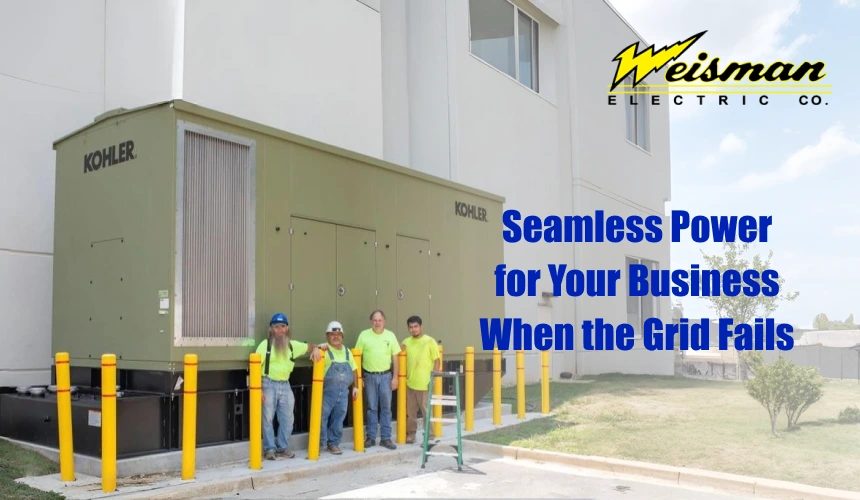
Power interruptions are no longer rare, short-lived inconveniences. Severe weather, aging infrastructure, grid overload, and unexpected equipment failures make outages more frequent and more disruptive for businesses across Maryland. When the lights go out, productivity stops, systems fail, customers leave, and revenue is lost.
A commercial generator acts as a safeguard against these disruptions. It provides immediate backup power so your business can continue operating when the grid fails. For many organizations, that continuity is not just helpful, it is essential.
Understanding commercial generator services
Commercial generators are designed to support larger electrical loads and critical systems that residential generators cannot handle. Professional commercial generator services cover everything from system design and load calculations to installation, testing, maintenance, and emergency repairs.
A properly selected and installed generator ensures that essential equipment such as servers, security systems, HVAC units, lighting, and specialized machinery continues to function without interruption. This level of preparedness allows businesses to operate confidently, even during extended outages.
Maintaining productivity during power outages
Lost power means lost time. For offices, manufacturing facilities, healthcare buildings, and retail spaces, even a brief outage can halt operations, delay projects, and frustrate customers.
A standby generator automatically activates when the utility power fails, keeping your systems running seamlessly. Employees can continue working, customers experience minimal disruption, and deadlines stay on track. Over time, the avoided downtime alone can justify the investment in a generator system.
Protecting safety and security
Safety is one of the most critical benefits of a commercial generator. When power fails, emergency lighting, access controls, fire alarms, and security systems can all go offline without backup power.
A generator ensures that these systems remain operational, protecting both people and property. Automatic transfer switches allow for a smooth transition to generator power, eliminating confusion and reducing risk during unexpected outages.
Preserving comfort and critical environments
Modern commercial buildings rely heavily on climate control. Without power, HVAC systems shut down, which can quickly make a building uncomfortable or even unsafe.
For businesses that rely on temperature-sensitive equipment, such as data centers, laboratories, or medical facilities, consistent climate control is essential. A commercial generator keeps HVAC systems operational, helping protect equipment, inventory, and sensitive data while maintaining a comfortable environment for staff and clients.
Avoiding costly equipment damage
Sudden power loss and surges during restoration can damage sensitive electronics and machinery. Servers, computers, point-of-sale systems, and industrial equipment are especially vulnerable.
A generator provides stable, regulated power during outages, reducing the risk of electrical damage. This protection extends the lifespan of your equipment and helps you avoid costly repairs or replacements.
Supporting business reputation and customer trust
Customers expect reliability. If your business cannot operate during a power outage, clients may seek alternatives, especially if competitors remain open.
Having a generator demonstrates preparedness and professionalism. It reassures customers that your business can deliver consistent service, even during challenging conditions. Over time, this reliability strengthens trust and enhances your brand reputation.
The role of professional commercial generator installation
Successful generator performance starts with proper commercial generator installation. Each business has unique power needs, and a one-size-fits-all approach rarely works.
A licensed electrician evaluates your facility’s electrical load, identifies critical systems, and recommends a generator with sufficient capacity. Proper installation also ensures compliance with local codes, safety standards, and manufacturer requirements, helping your system perform reliably when you need it most.
Ongoing maintenance keeps systems ready
Generators are only effective if they work when called upon. Regular inspections, testing, and servicing ensure that your system remains dependable.
Routine maintenance helps identify worn components, battery issues, or fuel problems before they lead to failure. Partnering with a trusted provider for ongoing commercial generator services ensures your system stays ready year-round.
Industries that benefit most from commercial generators
While nearly every business can benefit from backup power, some industries rely on it more than others:
- Medical and healthcare facilities
- Data centers and technology firms
- Retail stores and shopping centers
- Manufacturing and industrial operations
- Financial institutions and professional offices
For these businesses, uninterrupted power is not optional; it is essential.
Work With Weisman Electric Co.
For more than 40 years, Weisman Electric Co. has helped Maryland homeowners and commercial property owners stay safe, powered, and productive year-round. We provide complete commercial generator services, including system design, installation, repairs, and preventive maintenance.
Our team proudly serves Severna Park, Severn, Annapolis, Pasadena, Crofton, Arnold, Millersville, Edgewater, Mayo, Gambrills, Crownsville, and surrounding areas. If you want dependable backup power and expert guidance, Weisman Electric Co. is ready to help keep your business online when it matters most.
Contact us today to schedule a service consultation.
Frequently Asked Questions
1. How do I know what size generator my business needs?
Generator size depends on your total electrical load and which systems you want to power during an outage. A professional electrician performs a load analysis to determine the right capacity for your facility.
2. Can a commercial generator power my entire building?
Yes, many commercial generators are designed to support full-building loads. However, some businesses choose partial backup systems that prioritize critical equipment to reduce costs.
3. How quickly does a standby generator turn on during an outage?
Most standby generators activate automatically within seconds of detecting a power loss, minimizing disruption to operations.
4. What type of fuel do commercial generators use?
Commercial generators typically run on natural gas or diesel. Fuel choice depends on availability, run-time needs, and local regulations.
5. How often should a commercial generator be serviced?
Most manufacturers recommend routine inspections and testing at least once or twice a year. Facilities with critical power needs may require more frequent maintenance.