
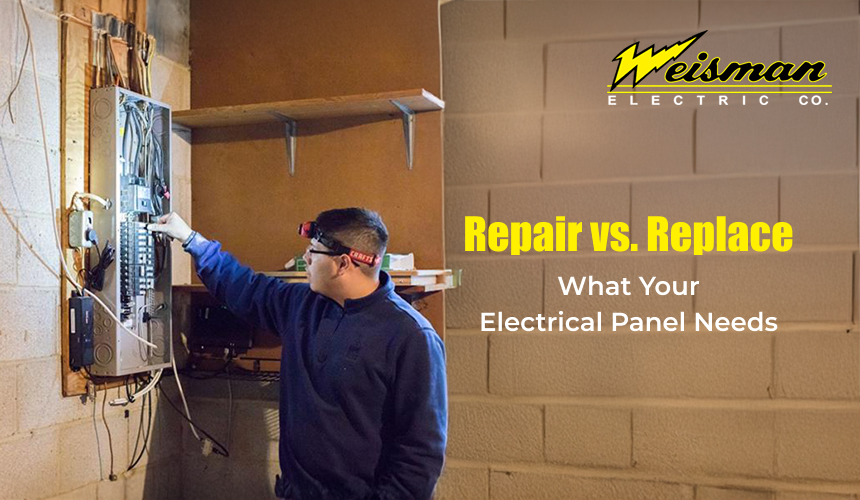
Our homes and businesses depend on a steady and safe supply of electricity. At the core of that system lies the circuit breaker and the electrical panel. These are two elements that work together to protect your property from overloaded circuits and electrical hazards.
But what happens when these systems start to fail? Do you repair the circuit breaker or replace the entire panel?
According to the National Fire Protection Association (NFPA), electrical distribution systems, including panels and breakers, are among the leading causes of electrical fires in U.S. homes. A faulty breaker or outdated panel can be more than an inconvenience; it can become a serious safety risk. Understanding the difference between a repairable issue and one that calls for full replacement is crucial for homeowners and business owners alike.
Let’s explore how circuit breakers and panels work, signs of failure, and when to opt for repairs vs. replacement.
The Basics: What Do Circuit Breakers and Electrical Panels Do?
Before diving into repair vs. replacement, it’s important to understand the roles of both components.
- Circuit Breakers are automatic safety switches that protect circuits from damage due to overload or short circuit. When a problem occurs, such as plugging too many devices into one outlet, the breaker cuts off power to prevent overheating or a fire.
- The Electrical Panel is the central hub that houses your breakers and distributes power throughout your home or building. It ensures the safe and organized flow of electricity to every room, appliance, or workstation.
Both are critical to your electrical safety, and both can wear out over time.
Common Causes of Breaker and Panel Issues
Just like plumbing or HVAC systems, your electrical components degrade with use. Here are some of the most common causes of failure:
- Age and wear: Breakers typically last 30–40 years, but heavy usage or environmental factors can reduce their lifespan.
- Overloaded circuits: Plugging in too many high-wattage devices causes repeated breaker trips.
- Corrosion or moisture damage: Can lead to rust, shorts, and poor connections.
- Improper installation or DIY fixes: Unsafe modifications can increase the risk of fire.
- Outdated technology: Older homes may still use obsolete panels (e.g., Zinsco or Federal Pacific), which fail to trip under fault conditions.
When to Repair the Circuit Breaker
In some cases, a failing breaker doesn’t mean the entire panel is bad. Here’s when a repair or simple replacement of the circuit breaker might be sufficient:
1. Single Breaker Trips Frequently
If only one breaker is tripping and the panel is otherwise in good condition, replacing that specific breaker can solve the problem.
2. Breaker Feels Warm or Smells Odd
This can mean the breaker is deteriorating, but hasn’t affected the rest of the panel yet. A certified electrician can replace the breaker and inspect the surrounding connections.
3. Breaker Won’t Stay Reset
If you reset the breaker and it instantly trips again, it may be worn or defective. Replacing it often resolves the issue.
In these cases, a licensed technician can replace the individual breaker and ensure everything else in the panel is safe and functioning properly.
When to Replace the Electrical Panel
Sometimes, the issue is more serious and more widespread. Here’s when replacing the entire electrical panel is the right call:
1. Your Panel Is More Than 30-40 Years Old
If your panel is nearing the end of its expected lifespan or can’t meet today’s energy demands, a full replacement ensures code compliance and safety.
2. You Have an Obsolete or Recalled Panel
Some panels from the 1950s–80s, including Federal Pacific and Zinsco, are known to malfunction or not trip at all during overloads. These panels should be replaced immediately.
3. You’ve Upgraded Your Home or Equipment
Installing central AC, EV chargers, or new appliances can require more amperage than your panel can handle. You’ll need a heavy-up to increase capacity and prevent constant tripping.
4. You Experience Multiple Breaker Failures
If multiple breakers are failing or the panel exhibits visible signs of damage (such as rust, scorch marks, or melting), it’s time to replace the entire unit.
5. Your Electrical Needs Have Outgrown the Panel
Running a home office, smart home tech, or commercial-grade equipment? A newer, higher-capacity panel can support modern lifestyles and business needs.
Can You Upgrade Breakers Without Replacing the Panel?
Yes, in some cases. You may be able to install AFCI (arc fault circuit interrupters) or GFCI (ground fault circuit interrupters) breakers to bring your system up to code without replacing the entire panel. However, if your panel cannot accommodate these modern safety devices, a replacement may be necessary.
A licensed electrician can guide you on whether your panel is compatible or if it’s time to upgrade.
The Importance of Prompt Repairs and Replacement
Delaying repairs or ignoring warning signs can lead to:
- Electrical fires
- Equipment damage
- Code violations and insurance issues
- Costlier emergency repairs
A report by the Electrical Safety Foundation International (ESFI) revealed that aging electrical systems are a growing concern in homes over 30 years old, which make up a significant portion of the U.S. housing market.
While some electrical issues can be resolved with simple breaker repairs, others call for a full panel replacement. Knowing the difference can save you money and prevent disaster.
When to Call a 24-Hour Electrician
Not every issue happens during business hours. That’s why it’s crucial to have a trusted 24-hour electrician on your contact list. Call for emergency help if you experience:
- Burning smell or smoke from your panel
- Sparking outlets or popping sounds
- Total power loss (when others nearby still have electricity)
- Water exposure near the panel
- Breakers that won’t reset and leave essential systems offline
Weisman Electric Co. provides 24/7 emergency services in Maryland to address urgent situations and restore power safely and efficiently.
Why Choose Weisman Electric Co. for Electrical Panel Services?
For over four decades, Weisman Electric Co. has delivered expert electrical panel services in Annapolis, MD, and surrounding areas. Whether you need a minor repair, a circuit breaker replacement, or a full panel upgrade, our team has the experience, tools, and commitment to do it right.
Our Services Include
- Electrical panel repairs and diagnostics
- Breaker replacements
- Heavy-up upgrades to increase capacity
- Replacement of outdated or recalled panels
- Installation of modern breakers (AFCI/GFCI)
- 24/7 emergency electrical services
Our certified electricians don’t work on commission, so you can trust us to provide honest, safety-first recommendations, never unnecessary upsells.
The best way to ensure safety, compliance, and performance is to schedule a professional inspection with a qualified team like Weisman Electric Co. Our experts evaluate your entire system and help you make informed decisions that protect your property and your peace of mind.
Frequently Asked Questions
1. How do I know if my circuit breaker needs to be replaced?
If your breaker trips frequently, emits a burning smell, feels hot to the touch, or shows signs of rust or physical damage, it’s time to consider replacement. A licensed electrician can assess whether a full panel replacement is necessary.
2. Can a faulty electrical panel cause a fire?
Yes. Faulty or outdated electrical panels can overheat, arc, or fail to trip during surges, significantly increasing the risk of electrical fires. This is why timely repairs or replacements are critical for home safety.
3. What is the average lifespan of an electrical panel?
Most electrical panels last between 25 to 40 years. However, factors such as power surges, moisture, and outdated wiring can reduce their lifespan, making regular inspections crucial.
4. Should I upgrade my electrical panel during a home renovation?
Absolutely. Renovations often increase your home’s power demand. Upgrading your panel ensures it can handle the added load safely and helps prevent tripped breakers or future electrical issues.
5. What’s the difference between repairing and replacing a breaker panel?
Repairs typically involve replacing individual breakers or tightening connections. Replacement involves installing a new panel box and modern components, which is often recommended for outdated or unsafe systems.
6. How much does it cost to replace an electrical panel?
Costs vary based on panel size, home layout, and local code requirements. On average, homeowners can expect to pay between $1,500 and $3,500. Get an inspection from a professional electrical service provider like us for a precise estimate.
7. Can I replace or repair a circuit breaker myself?
No. Electrical panel work is a hazardous task and should only be performed by a licensed electrician. Improper handling can lead to electrocution, fire, or code violations. Always hire a qualified professional.